

Scorching Heatwave Sweeps Asia-Pacific, Stirring Up Natural Gas Market
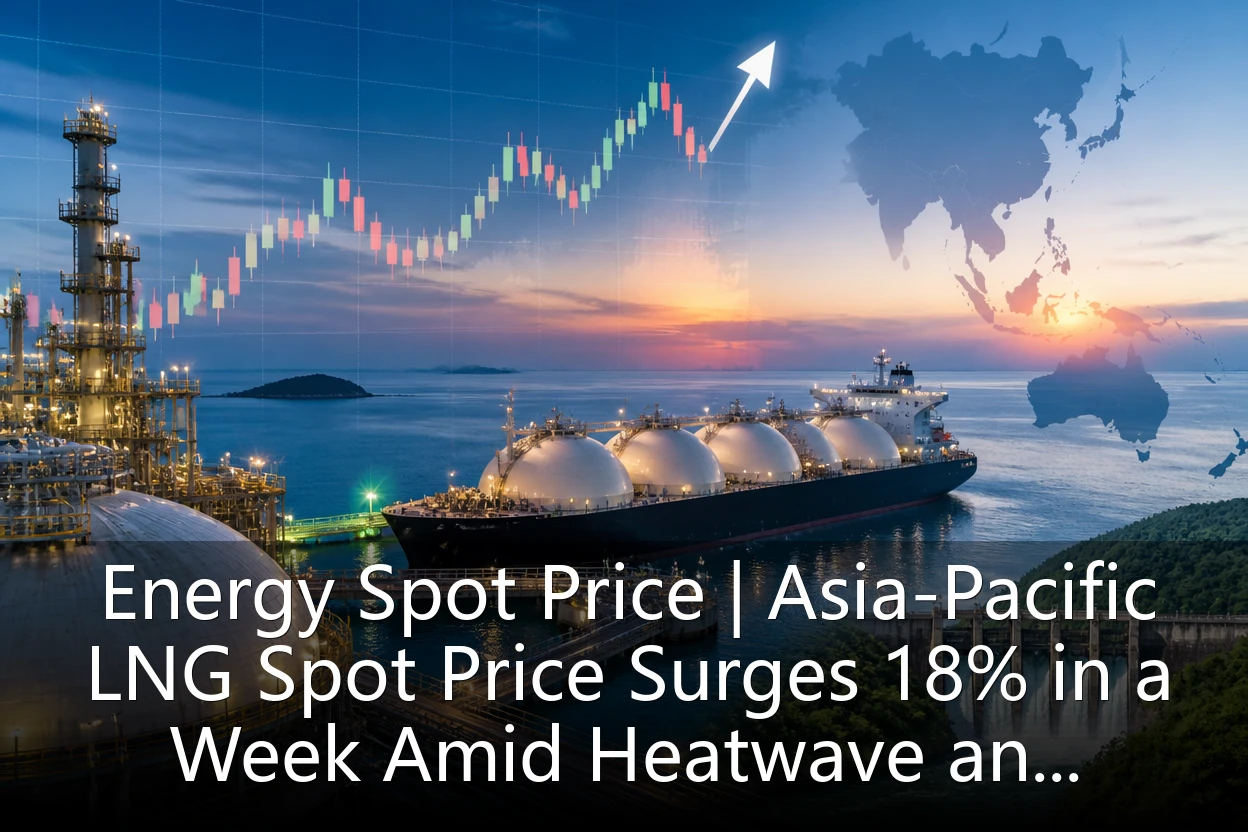
As August 2026 begins, extreme heat continues to scorch the Northern Hemisphere, causing a sharp surge in cooling electricity demand across the Asia-Pacific region. However, at this critical juncture of soaring demand, several LNG export facilities in Southeast Asia unexpectedly entered maintenance periods, compounded by production cuts at some Australian projects, leading to a spike in Asian LNG spot prices. As of August 3, the JKM (Japan-Korea Marker), considered the benchmark for Asian LNG spot prices, had risen 18% from the previous week, breaking through the $15 per million British thermal units mark and reaching its highest level since May this year.
Supply Side Hit by Setbacks, Market Panic Spreads
According to market sources, Petronas' LNG complex in Bintulu was forced to reduce its operating load due to a compressor failure, with the impact expected to last at least three weeks. Meanwhile, Australia's North West Shelf project also delayed a batch of cargoes originally scheduled for delivery at the end of July due to technical issues. The combination of these two supply-side disruptions instantly tightened the already precariously balanced Asia-Pacific natural gas market.
"The market is currently in a highly sensitive state, where any supply-side disturbance is magnified," said a senior energy trader in Singapore. "Buyers, fearing the supply disruption might extend into late August, are rushing to secure spot cargoes, further driving up prices."
Laos Hydropower Substitution Effect Becomes Prominent, Reshaping Regional Energy Landscape
Against the backdrop of rapidly climbing natural gas prices, Laos's strategic position as the "Battery of Southeast Asia" is once again drawing significant market attention. Laos has vigorously developed its hydropower resources in recent years, and its electricity exports have become a crucial supplement for neighboring countries like Thailand and Vietnam during energy crises. Data shows that in the first half of 2026, Laos's revenue from electricity exports grew by 18% year-on-year, with a particularly notable increase in export volume to Vietnam.
"When natural gas prices exceed a certain threshold, the economic advantage of Lao hydropower becomes very clear," analyzed a fund manager specializing in Asia-Pacific energy investments. "We observe that whenever the JKM price breaks through $12, the dispatch priority for Lao hydropower in the grids of Thailand and Vietnam significantly increases. This substitution effect is reshaping the pricing logic of regional energy spot prices."
Electricity Spot Prices Rise in Tandem, Energy Spot Prices Under Broad Pressure
The surge in natural gas prices quickly transmitted to the electricity market. Singapore's Uniform Singapore Energy Price (USEP) briefly soared to S$450 per megawatt-hour during intraday trading on August 2, an increase of nearly 40% from the July average. Wholesale electricity prices in Thailand and the Philippines also saw significant increases. This round of comprehensive energy spot price rebounds, driven by natural gas, is testing the energy subsidy policies of Southeast Asian governments.
Market analysts believe that weather forecasts for the next two weeks and the pace of supply recovery will be key variables determining the price direction. If the heatwave persists and supply recovery falls short of expectations, the JKM price could further climb towards the $18 mark. Conversely, if the weather cools or supply recovers earlier than expected, prices could rapidly fall back, with potentially severe volatility.
Investment Implications: Focus on Alternative Energy and Regional Interconnection
This LNG price surge once again confirms the importance of energy diversification. For Laos, this represents both a strategic opportunity for hydropower exports and a higher demand on its domestic power infrastructure. As the ASEAN Power Grid interconnection projects progress, Laos's role in regional energy security will become even more critical. Investors should closely monitor the development progress of Lao hydropower projects, the construction of cross-border transmission channels, and changes in regional energy policies, as these factors will directly influence the long-term trend of energy spot prices.