

August 2026 Asia-Pacific Energy Market: Dual Challenges of Extreme Climate and Supply Chain Restructuring
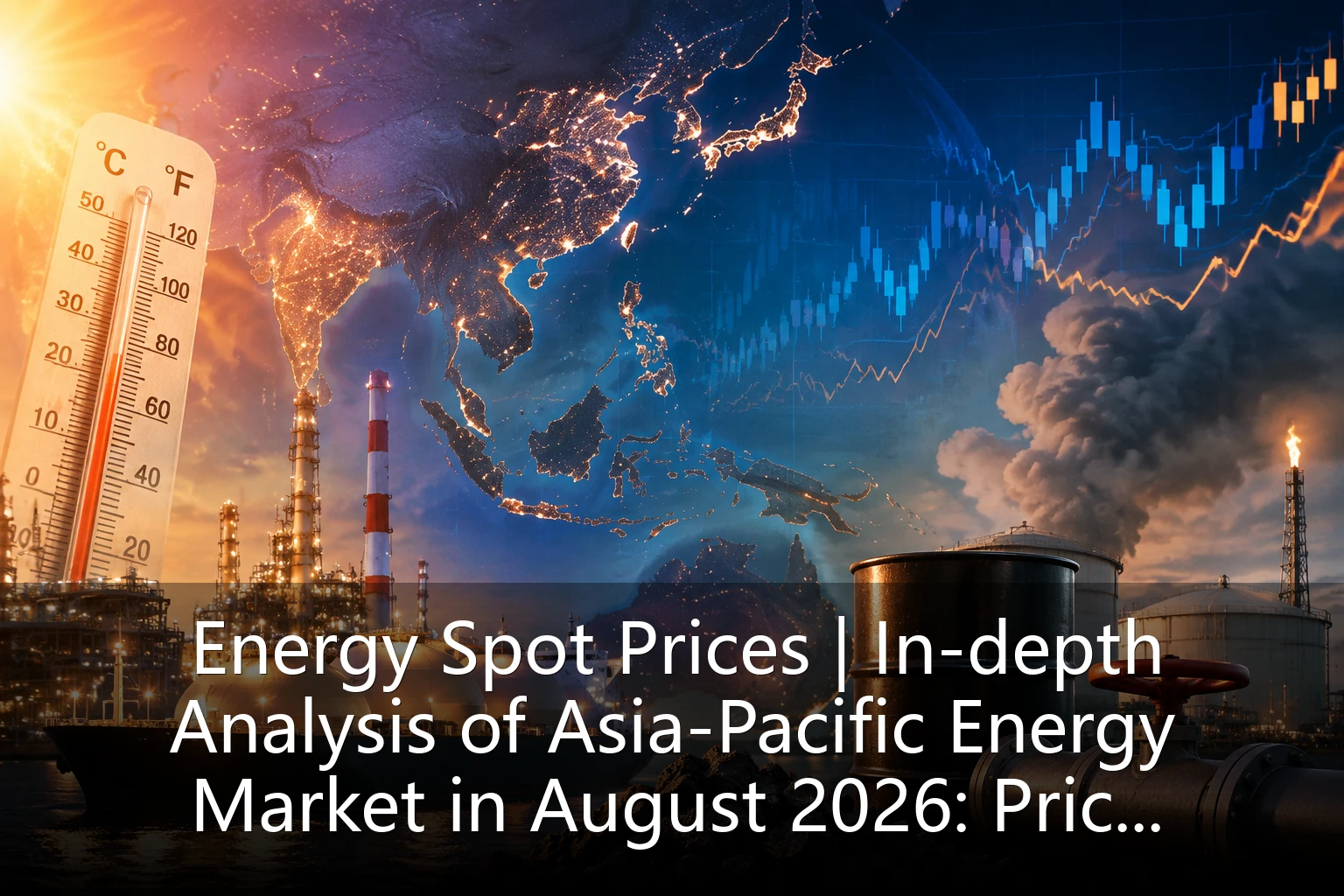
In August 2026, the Asia-Pacific energy market is experiencing an unprecedentedly complex situation. Extreme heat waves are sweeping across the entire region, driving energy demand to unprecedented levels; simultaneously, the global energy supply chain is undergoing deep restructuring, with geopolitical factors and energy transition processes intertwining to shape the current dynamic landscape of Asia-Pacific energy prices. As the Laos Asia-Pacific Finance and Energy Market Observer, we have conducted an in-depth analysis of the latest dynamics of current energy spot prices and their driving factors, providing investors with decision-making references.
Surge in Energy Demand Under Extreme Climate
During the summer of 2026, the Asia-Pacific region experienced the most severe heatwave on record. According to data from the Asian Meteorological Organization, in early August, the average temperatures in countries such as India, Pakistan, Thailand, and Vietnam were 3-5°C higher than the same period in history, with some areas even exceeding the 45°C high-temperature warning threshold. This extreme climate has directly led to a sharp increase in energy demand, particularly with electricity demand reaching record highs.
Data from the Thailand Electricity Authority shows that in the first week of August, national electricity consumption increased by 18.7% compared to the same period last year, with air conditioning cooling loads accounting for more than 60%. Vietnam Electricity Corporation reported that electricity loads in many areas have repeatedly hit new highs, forcing major cities like Hanoi and Ho Chi Minh City to implement rotating power rationing measures. India's Central Electricity Authority stated that the national peak power demand has exceeded 200 million kilowatts, a year-on-year increase of 15.3%.
This surge in demand has directly pushed up energy spot prices. In the electricity market, spot electricity prices have shown a clear upward trend. Data from Singapore Energy Market Company (EMC) shows that in the first week of August, Singapore's average electricity spot price reached $95 per megawatt-hour, a 23.5% increase from late July, reaching the highest level for the same period in nearly three years. Electricity wholesale prices in Malaysia and Indonesia also increased by 17.2% and 19.8%, respectively.
Supply Chain Restructuring and Geopolitical Impacts
In addition to extreme climate factors, the restructuring of the global energy supply chain is also a significant driver of current price fluctuations. In 2026, the global energy market is undergoing a critical transition from traditional oil and gas to a diversified energy structure, a process accompanied by the redistribution and adjustment of supply chains.
In the natural gas market, the Asia-Pacific region is experiencing price differentiation. On one hand, due to the resumption of operations on the Nord Stream pipeline, Europe's natural gas supply tension has eased, with the TTF benchmark price falling by 8.3% from the previous month. On the other hand, the JKM (Japan Korea Marker) spot price in the Asia-Pacific region has risen against the trend, reaching $18.75 per million British thermal units in the first week of August, a 12.4% increase from the same period last month.
This differentiation is mainly due to the adjustment of the Asia-Pacific region's own supply chain. As a major LNG exporter in the Asia-Pacific region, Australia's 2026 capacity expansion plans have been hindered by delays in environmental approval, leading to supply growth that falls short of expectations. Meanwhile, although the United States' LNG export capacity continues to increase, its strategic priority of supplying Europe limits the incremental supply to the Asia-Pacific region.
The coal market is also facing supply tightness. As the world's largest thermal coal exporter, Indonesia implemented stricter mineral mining policies in 2026, leading to limited export volumes. Data shows that in August, Indonesia's thermal coal benchmark price (HBA) reached $123 per ton, a 31.5% increase from the beginning of the year, reaching the highest level since 2011. Major importing countries such as China, India, and Japan have to accept higher procurement costs.
Laos: A New Pivot in the Asia-Pacific Energy Landscape
Against the backdrop of increasing volatility in the overall Asia-Pacific energy market, Laos's position as a regional energy hub is becoming increasingly prominent. With its abundant hydropower resources, Laos is becoming an important electricity exporter in the region and playing a key role in the restructuring of the energy supply chain.
Latest data from the Laos Ministry of Energy shows that in the first half of 2026, Laos's electricity export revenue reached $872 million, a year-on-year increase of 18.3%, with electricity exports to China, Thailand, and Vietnam accounting for 42%, 35%, and 18% of total exports, respectively. Notably, in August, Laos's electricity export price to Thailand increased by 15.6% compared to the same period last year, reaching $0.087 per kilowatt-hour, an all-time high.
"Laos is transitioning from a traditional resource exporter to an energy service provider," said Somsavat Lengsavad, Laos's Minister of Energy, at a recent energy forum. "We not only export electricity but also actively participate in regional grid interconnection and energy reserve system construction, providing new support for Asia-Pacific energy security."
Meanwhile, Laos is also actively developing diversified renewable energy. In July 2026, the Lao government announced a new energy development roadmap, planning to increase the share of renewable energy from the current 65% to 75% by 2030, with solar and wind power installed capacity reaching 2GW and 1.5GW respectively. This transition will not only help increase the added value of Laos's energy exports but also have a profound impact on regional energy prices.
Deep Causes and Future Trends of Energy Price Fluctuations
The current fluctuations in Asia-Pacific energy prices are not short-term phenomena but the result of multiple structural factors working together. First, the global energy transition is accelerating, with the substitution effect between traditional energy and new energy becoming increasingly obvious, leading to a more complex energy price formation mechanism. Second, the acceleration of regional integration, especially the advancement of the ASEAN power grid interconnection project, has strengthened the correlation of energy prices within the region, making the transmission effect of fluctuations more significant.
Third, the reshaping of the geopolitical landscape has a profound impact on the energy supply chain. The ongoing Russia-Ukraine conflict, changes in the Middle East situation, and great power energy competition in the Asia-Pacific region have all increased the uncertainty of energy supply. Finally, frequent extreme weather events caused by climate change pose continuous challenges to energy infrastructure and supply-demand balance.
Looking ahead, Asia-Pacific energy prices may show the following trends: in the short term, as the summer electricity peak continues, electricity prices will remain high; in the medium term, as new energy capacity is gradually released, price volatility will decrease but structural differentiation will become more obvious; in the long term, with the deepening of energy transition and improvement of regional cooperation mechanisms, the Asia-Pacific energy market will gradually form a more stable and efficient price formation mechanism.
Investment Strategies and Risk Management Recommendations
Facing the current complex energy market environment, investors need to adopt more refined strategies. First, they should closely monitor the correlation between climate anomalies and energy demand, establish dynamic demand forecasting models, and avoid the limitations of traditional seasonal analysis. Second, supply chain diversification has become key to reducing risks, and investors should focus on energy companies with multi-source supply channels and cross-regional layouts.
In terms of asset allocation, a "core-satellite" strategy is recommended: core allocation should focus on traditional energy assets with stable cash flows and long-term contracts, while satellite allocation should focus on