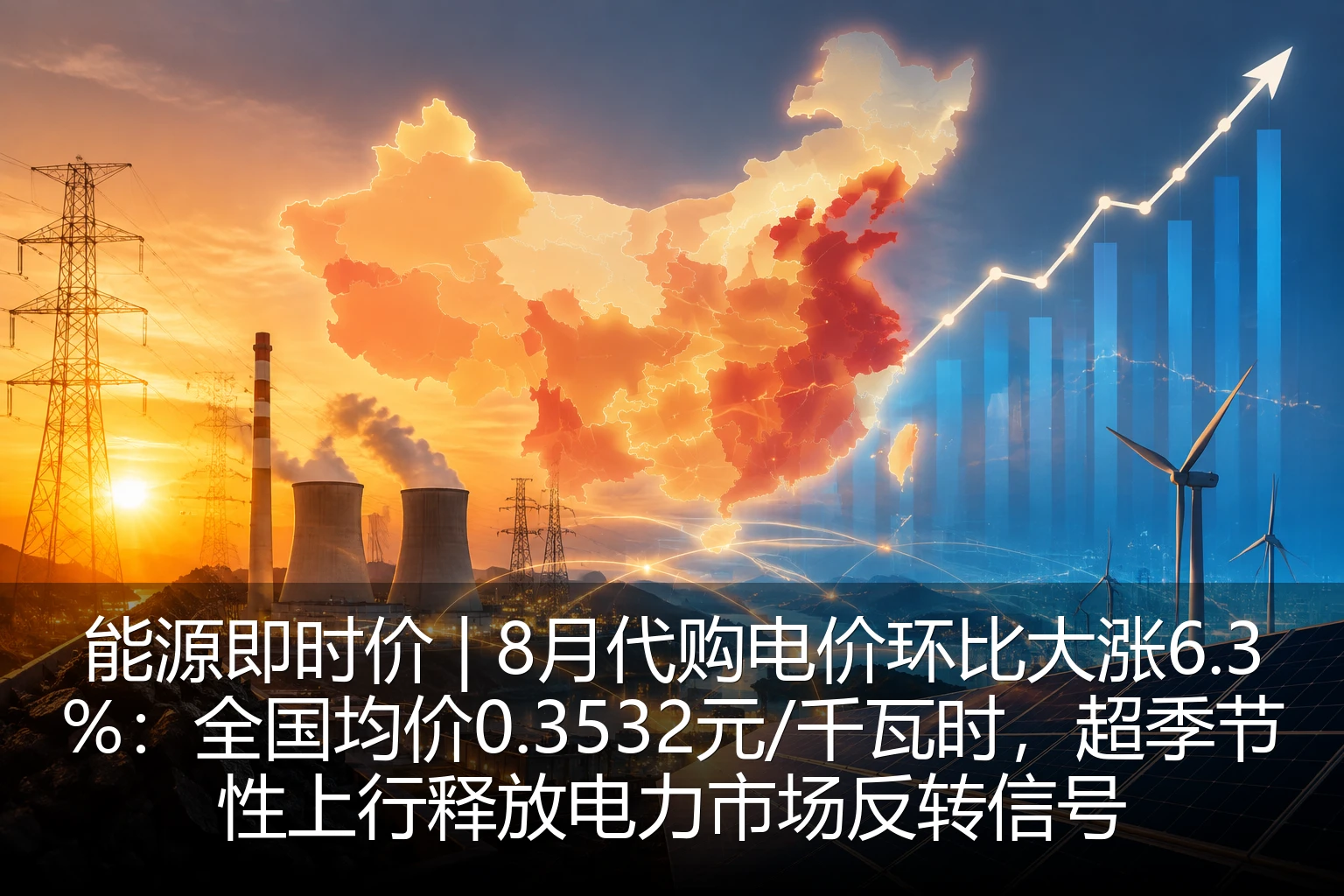



Asian Energy Market Faces Multiple Challenges with Exceptionally Price Volatility in August
In August 2026, the Asian energy market is experiencing unprecedented price fluctuations. Sustained high temperatures combined with geopolitical tensions have led to significant volatility in electricity, natural gas, and oil prices across the region, with multi-category energy prices reaching new yearly highs. These changes not only affect countries' energy security strategies but also pose new challenges to regional economic recovery. As an important observation window for energy prices in the Asia-Pacific region, Laos' energy market has also felt this wave of volatility.
Continued High Temperatures Drive Up Electricity Demand, Electricity Prices Hit New Highs in Multiple Countries
Since summer began, most of Asia has experienced extreme high temperatures, with many countries breaking historical temperature records. This abnormal climate has directly led to a surge in electricity demand, with significant increases in electricity consumption for cooling equipment such as air conditioners. According to the latest data from the Asian Energy Monitoring Center, in the first week of August 2026, electricity prices in major Asian economies generally increased by 5%-15% month-on-month, with Thailand, Vietnam, and the Philippines showing the most significant increases, reaching 12.7%, 10.3%, and 9.8% respectively.
In Laos, despite its abundant hydropower resources, sustained high temperatures have also led to tight electricity supply and demand. According to data from the Ministry of Energy of Laos, the national average electricity price in early August increased by 8.5% compared to July, and some provinces had to implement phased power rationing measures due to excessive grid loads. This phenomenon indicates that even in Southeast Asian countries rich in hydropower resources, the impact of extreme weather on energy supply cannot be ignored.
Analysts point out that the rise in Asian electricity prices is not only affected by short-term weather factors but also reflects the lag in regional power infrastructure construction at a deeper level. As countries' economic recovery and industrialization accelerate, electricity demand continues to grow, while the speed of new power plants and grid expansion often fails to keep up with the growth in demand, leading to a gradually expanding supply-demand gap.
Natural Gas Market Differentiation Intensifies, Prices in Asia-Pacific Region Rise Sharply
In contrast to the relatively stable European natural gas market, the Asian natural gas market experienced severe fluctuations in August 2026. Asian liquefied natural gas (LNG) spot prices surged 18% in a single week, reaching the highest level in nearly 18 months. This increase was mainly driven by three factors: first, global LNG supply tightened due to maintenance of some facilities in Australia and Qatar; second, summer power generation demand surged in the Asian region; third, geopolitical risks led some buyers to turn to the spot market to secure supply.
Specifically, the spot import prices of major LNG importing countries such as Japan, South Korea, and China increased by an average of 22% in August compared to July, with Japan's JKM (Japan Korea Marker) benchmark price breaking through $25/MMBtu, the highest since February 2025. This price increase has a direct impact on energy costs and inflation expectations in various Asian countries.
Notably, the Asian natural gas market is undergoing structural changes. On one hand, investment in regional LNG terminals and infrastructure is accelerating, with new LNG receiving capacity in China, India and other countries gradually being released; on the other hand, as carbon neutrality goals advance, there is uncertainty in natural gas power generation policies in various countries, and the long-term market outlook still faces challenges.
Oil Prices Oscillate Upward, Geopolitical Risks Dominate Market Sentiment
In the oil market, oil prices showed an upward trend with fluctuations in August 2026. Brent crude futures prices once broke through $85/barrel in early August, an increase of about 7% from the end of July. This trend was mainly affected by the escalation of geopolitical tensions in the Middle East. As shipping security risks in the Red Sea increased, market concerns about crude oil supply disruptions intensified, pushing oil prices higher.
At the same time, positive signals of global oil demand recovery also provided support for oil prices. The latest report from the International Energy Agency (IEA) shows that global oil demand is expected to grow by 1.9 million barrels/day in 2026, with the Asian region contributing to more than 60% of the growth. Oil consumption in major economies such as China and India continues to recover, with significant growth in demand in the transportation and chemical sectors.
However, the rise in oil prices also faces certain resistance. The willingness of OPEC+ countries to increase production has strengthened, and US shale oil production has steadily recovered, factors that have limited the upward space for oil prices. Market analysts generally believe that oil prices will maintain high volatility in the short term, with increased volatility, but the possibility of breaking through the $90/barrel mark is limited.
Impact of Energy Price Fluctuations on Regional Economy and Response Strategies
The sharp fluctuations in energy prices pose severe challenges to the economic stability and inflation control of various Asian countries. Against the backdrop of high inflation, rising energy prices will further push up production costs and living costs, possibly forcing central banks to adjust the pace of monetary policy. Southeast Asian countries such as Laos are particularly concerned about the secondary impact of rising energy prices on inflation, especially the transmission effect on food and industrial production costs.
In response to energy price fluctuations, governments and enterprises are actively seeking countermeasures. At the policy level, many countries are strengthening energy reserve management, releasing strategic petroleum reserves, and promoting diversification of energy imports. At the enterprise level, energy-intensive industries are accelerating the transformation of energy-saving and emission-reduction technologies while increasing energy hedging operations to hedge against price fluctuation risks.
In the long run, the transformation of the Asian energy market is imperative. On one hand, countries are accelerating the development of renewable energy and increasing the proportion of clean energy to reduce dependence on fossil fuels; on the other hand, regional energy cooperation is being strengthened to build a more stable and efficient energy supply system. As an important hydropower exporting country in Southeast Asia, Laos is actively expanding regional power cooperation and promoting cross-border grid interconnection to enhance energy supply stability and economic benefits.
Future Outlook: Energy Market May Enter a New Normal
Looking ahead, the Asian energy market may enter a new normal with increased volatility. On one hand, frequent extreme weather events will become the norm, posing continuous challenges to the energy supply-demand balance; on the other hand, the global energy transition is accelerating, and the game between traditional energy and new energy will become more intense, and the price formation mechanism will also become more complex.
For investors, the volatility of the energy market brings both challenges and opportunities. On one hand, traditional energy assets face transformation pressure, and return on investment may decline; on the other hand, investment opportunities in the new energy and energy technology sectors continue to emerge, especially in energy storage, smart grids, and carbon capture technologies, which are expected to achieve excess returns.
Overall, the severe fluctuations in the Asian energy market in August 2026 reflect the profound changes that the global energy system is undergoing. In this transition process, governments, enterprises, and investors need to respond more flexibly to market changes, seize the opportunities of energy transition, and jointly build a safer and more sustainable energy future.