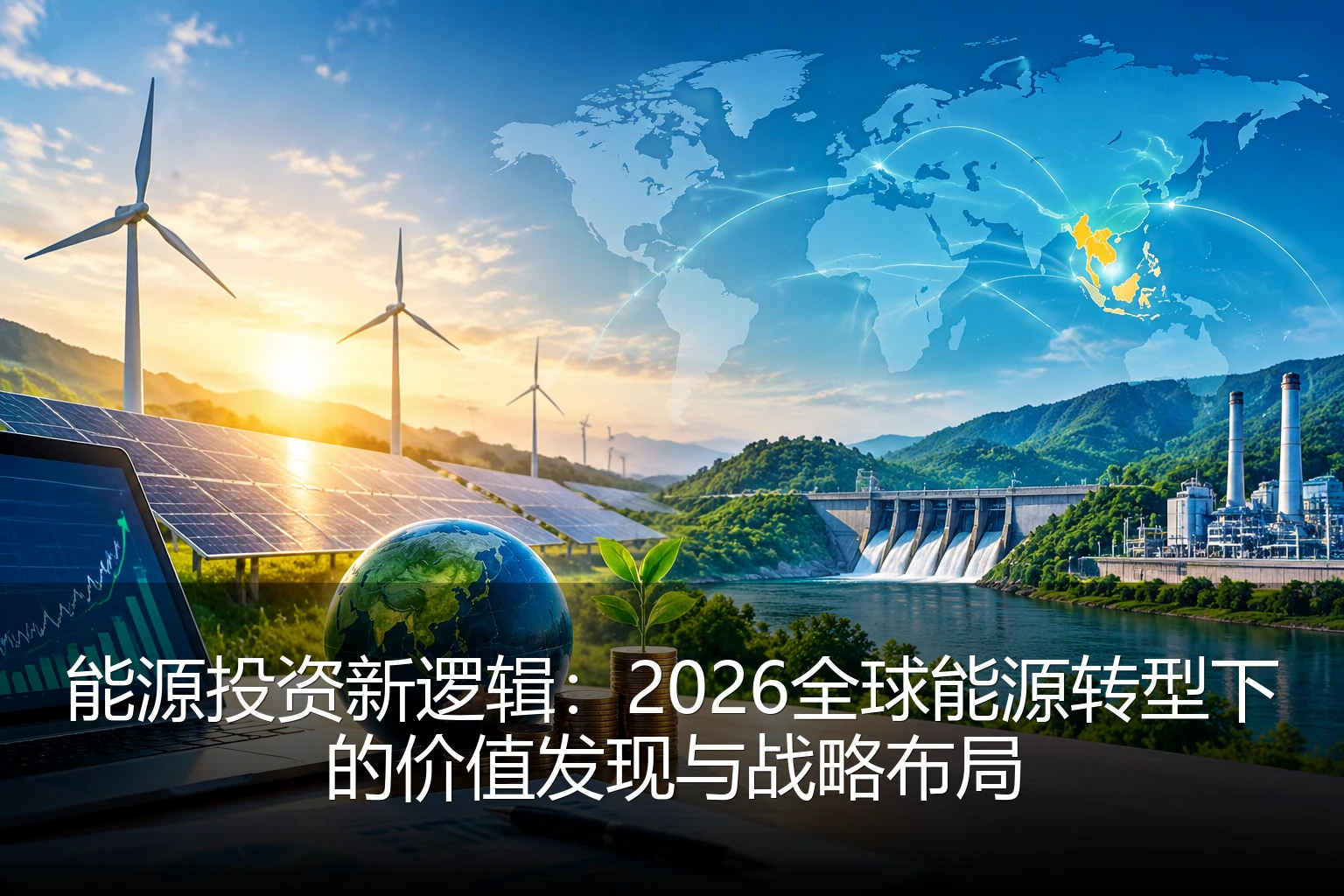



Asia-Pacific Energy Market: The Core Engine of Global Energy Transition
As one of the fastest-growing regions globally, the energy market in the Asia-Pacific is undergoing unprecedented transformation and presenting immense opportunities. With the accelerating shift in the global energy structure, the Asia-Pacific is emerging as a new hotspot for global energy investment, thanks to its unique resource endowments, policy support, and market demand. This article will deeply analyze the investment value, development trends, and strategic opportunities within the Asia-Pacific energy market to provide decision-making references for investors.
In 2026, the Asia-Pacific energy market is showing a diversified development trend. On one hand, traditional energy sources such as coal, oil, and natural gas still hold significant positions, particularly in Southeast and South Asia; on the other hand, renewable energy sources like solar, wind, and hydropower are growing at an astonishing pace. This diversification offers investors rich investment choices, allowing for flexible allocation based on risk appetite and investment cycles.
Unique Advantages of the Asia-Pacific Energy Market
The Asia-Pacific energy market possesses several unique advantages that make it a focal point for global energy investment:
- Abundant Energy Resources: The Asia-Pacific region has rich traditional energy resources, including coal, oil, and natural gas, while also possessing abundant renewable resources such as solar, wind, and water power, providing a solid foundation for energy investment.
- Massive Market Demand: The Asia-Pacific accounts for over 60% of the global population, with continuously leading economic growth and vigorous, rapidly growing energy demand, offering vast market space for energy investment.
- Strong Policy Support: Governments across the region are implementing policies to support energy transition and renewable energy development, including tax incentives, subsidies, and green finance, which reduces investment risk and enhances returns.
- Active Technological Innovation: The Asia-Pacific demonstrates outstanding performance in energy technology innovation, especially in areas like renewable energy, energy storage, and smart grids, fostering internationally competitive enterprises and innovative technologies.
Core Areas and Opportunities in Asia-Pacific Energy Investment
Renewable Energy: The Fastest-Growing Investment Sector
Renewable energy is the most vibrant sector in Asia-Pacific energy investment. According to BloombergNEF forecasts, renewable energy investment in the Asia-Pacific is projected to exceed $300 billion in 2026, accounting for over 50% of total global renewable energy investment. Among these, solar and wind power are the two fastest-growing sub-sectors.
China, as the world's largest renewable energy market, possesses a complete industry chain and scale advantages, leading globally in installed capacity for both photovoltaics and wind power. India has also become another hotspot for renewable energy investment due to its massive market potential and proactive policy support. Southeast Asian countries such as Vietnam, Thailand, and Malaysia attract significant international investment due to their rich solar resources and relatively low electricity costs.
In renewable energy investment, investors can focus on the following areas:
- Large-scale Renewable Energy Power Plant Development: Including solar PV power stations and wind farms, these offer economies of scale and stable cash flow.
- Renewable Energy Equipment Manufacturing: Such as PV modules, wind turbine generators, and energy storage equipment, benefiting from the rapid growth of global renewable energy capacity.
- Renewable Energy Technology Innovation: Such as high-efficiency solar cells, advanced wind power technologies, and new energy storage technologies, characterized by high growth potential and high added value.
Traditional Energy Transition and Clean Utilization
Although renewable energy is developing rapidly, traditional energy will remain an important part of the energy structure in the Asia-Pacific region for a considerable time. Therefore, the clean and efficient utilization and transition of traditional energy have also become important investment directions.
In the coal sector, clean and efficient utilization technologies such as supercritical power generation and Integrated Gasification Combined Cycle (IGCC) have broad prospects. Natural gas, as a relatively clean fossil fuel, plays the role of a "bridge fuel" in the energy transition process, and Liquefied Natural Gas (LNG) infrastructure and distributed natural gas power generation are important investment areas.
Energy Storage and Smart Grids: Key Support for Energy Transition
The large-scale grid connection of renewable energy places higher demands on power system stability, making energy storage and smart grids crucial supports for energy transition. The energy storage market in the Asia-Pacific region is growing at a rate of over 30% annually, and the market size is expected to reach $80 billion by 2026.
Energy storage technologies include lithium batteries, sodium-ion batteries, flow batteries, and compressed air energy storage, each with its own characteristics and application scenarios. Smart grids include technologies such as smart meters, distribution automation, and demand response, which can improve the efficiency and flexibility of the power system.
Risks and Challenges in Asia-Pacific Energy Investment
Despite the broad prospects of energy investment in the Asia-Pacific region, there are a series of risks and challenges that investors need to fully recognize and address:
- Policy Risks: Changes in energy policies can affect investment returns, such as adjustments to subsidy policies or changes in feed-in tariffs.
- Market Risks: Factors such as energy price fluctuations and supply and demand changes can affect investment income.
- Technology Risks: Improper selection of technology routes or rapid technological iteration can lead to investment losses.
- Geopolitical Risks: The geopolitical complexity of the Asia-Pacific region means that changes in international relations can affect the energy investment environment.
Recommendations for Asia-Pacific Energy Investment Strategies
Diversified Allocation to Mitigate Risks
Investors should diversify their investments across traditional and renewable energies, different technology routes, and various countries and regions, based on their risk appetite and investment goals, to reduce single-investment risks.
Long-Term Holding and Value Investing
Energy transition is a long-term process, and energy investments should focus on long-term value rather than short-term speculation. High-quality energy assets have stable cash flows and continuous growth potential, making them suitable for long-term holding.
Focusing on Policy Direction to Capture Policy Dividends
Energy investment is highly dependent on the policy environment. Investors should closely monitor the energy policy trends of various countries to seize policy dividends, such as renewable energy subsidies and green finance support.
Technological Innovation and Industry Chain Integration
Technological innovation is the core driving force of energy investment. Investors should pay attention to companies with core technological advantages and innovation capabilities. Furthermore, industry chain integration is an important way to increase investment returns by reducing costs and enhancing competitiveness through vertical integration or strategic alliances.