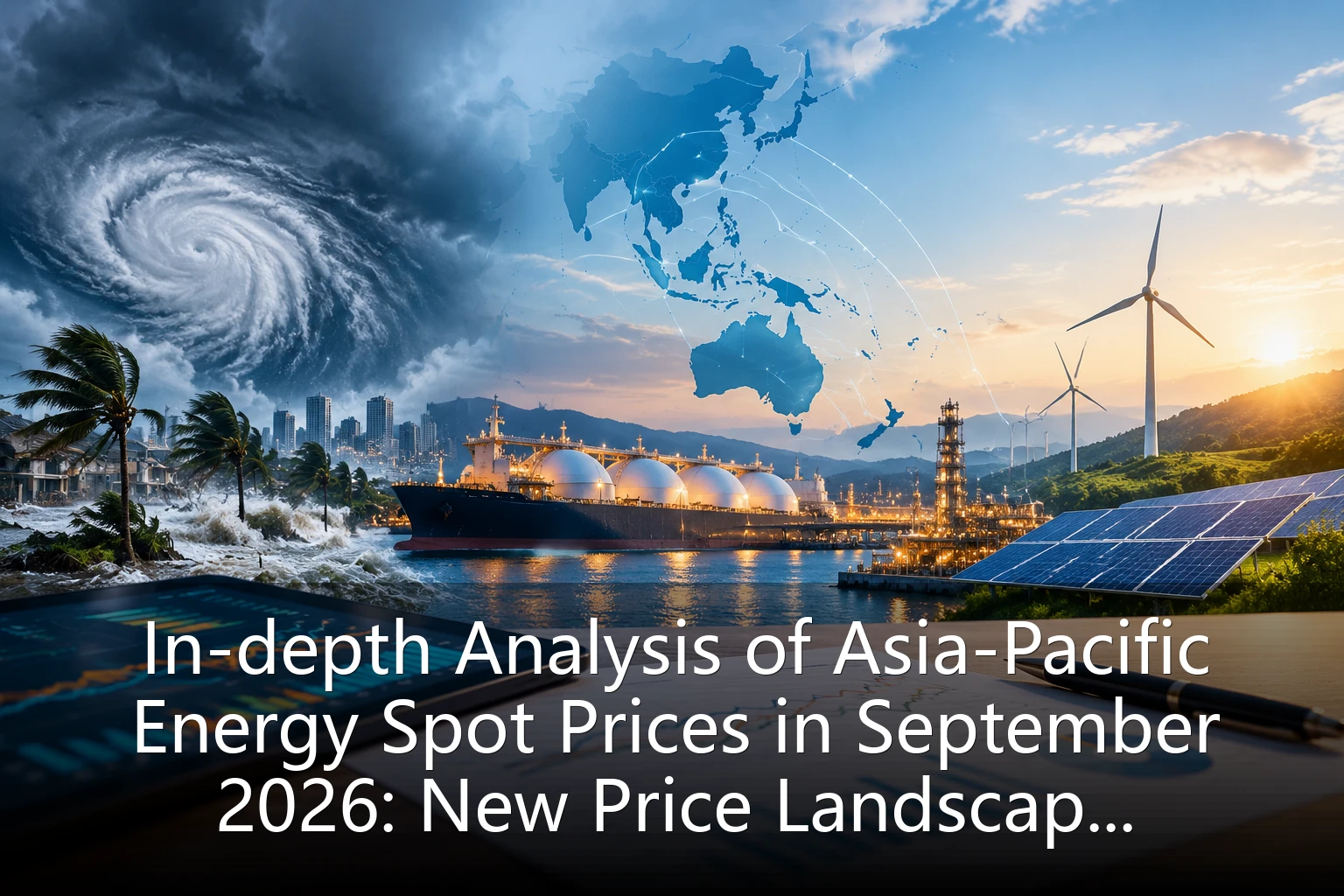
In September 2026, the Asia-Pacific energy market presented a new pattern of price divergence, driven by the dual forces of extreme climate and regional cooperation. As a major energy exporter in Southeast Asia, Laos has become a crucial pillar of regional energy supply due to its abundant hydropower resources. This month, Laos's hydropower exports reached a record high, and the regional grid interconnection projects are accelerating, which has not only changed the energy supply and demand structure of the Asia-Pacific region but has also profoundly influenced the formation mechanism of real-time energy prices. This article will deeply analyze the reasons behind the fluctuations in Asia-Pacific real-time energy prices from the perspective of Laos's energy development, discuss future trends, and provide professional reference for investors.
I. Laos's Energy Development: The "Stabilizer" of the Asia-Pacific Energy Market
Located in Central Southeast Asia, Laos possesses rich hydropower resources, with a theoretical reserve of approximately 26 million kilowatts and a developable capacity of about 18 million kilowatts, ranking first in Southeast Asia. In recent years, the Lao government has promoted hydropower as a pillar industry for national economic development, increasing infrastructure investment and advancing hydropower development and regional cooperation. In 2026, Laos's installed hydropower capacity reached 12 million kilowatts, a 40% increase from 2020, with hydropower exports accounting for over 60% of the national power output, making it the largest hydropower exporter in Southeast Asia.
This month, Laos's hydropower exports increased by 15% compared to the previous month, reaching a new high. This growth is mainly attributable to two factors: first, the surge in electricity demand in neighboring countries due to extreme weather, particularly Thailand and Vietnam, where high temperatures led to a significant increase in air conditioning power consumption, highlighting power shortages; second, the advancement of regional grid interconnection projects, which have tightened the grid connection between Laos and countries such as Thailand, Vietnam, and Cambodia, improving transmission capacity and enabling Laos's hydropower to be transmitted more efficiently to high-demand areas.
Data from the Lao Ministry of Energy shows that in September 2026, Laos exported approximately 8 million kilowatt-hours of electricity to Thailand and about 5 million kilowatt-hours to Vietnam, representing increases of 20% and 15% month-on-month, respectively. These exports have not only alleviated power shortages in neighboring countries but have also brought considerable economic benefits to Laos. It is estimated that revenue from Laos's hydropower exports accounts for over 10% of the national GDP, making it a vital source of foreign exchange.
II. Extreme Climate and Regional Cooperation: The "Dual Drive" of Real-Time Energy Prices
In September 2026, the Asia-Pacific region experienced extreme climate events, with frequent high temperatures and droughts leading to surging electricity demand. According to International Energy Agency (IEA) statistics, electricity demand in the Asia-Pacific region increased by 8% this month compared to the previous month, with demand increases exceeding 10% in countries like Thailand and Vietnam. This surge in demand has driven up electricity prices, especially during peak hours.
At the same time, regional cooperation has become an important factor influencing real-time energy prices. Grid interconnection projects between Laos and neighboring countries, such as the "Laos-Thailand transmission line" and the "Laos-Vietnam transmission line," allow energy to flow freely within the region, alleviating power shortages in some countries. For example, Thailand has reduced its consumption of coal and natural gas by importing electricity from Laos, thereby lowering generation costs and mitigating power shortages. This cooperation has resulted in a divergence in the Asia-Pacific energy market, characterized by "price increases on the demand side and stability on the supply side."
Specifically, Thailand's electricity price rose by 12% this month compared to the previous month, and Vietnam's electricity price rose by 10%, while Laos's electricity price remained relatively stable due to increased exports, rising by only 3%. This price divergence reflects the impact of regional cooperation on real-time energy prices: countries with high demand see their electricity prices rise, while countries with sufficient supply maintain stable prices. Chapter 3: Supply Chain Restructuring: The "Invisible Driver" of Energy Spot Prices
The adjustment of global supply chains has also profoundly affected Asia-Pacific energy spot prices. In 2026, fluctuations in global coal and natural gas supplies led some countries to shift towards hydropower, increasing the demand for Lao hydropower. For instance, Indonesia increased the amount of electricity imported from Laos due to coal supply shortages, while Malaysia switched to using Lao hydropower due to rising natural gas prices.
Furthermore, the rapid development of renewable energy has made Lao hydropower more competitive. With the popularization of renewable energy such as solar and wind power, the clean energy attributes of Lao hydropower have become more prominent, attracting more international investment. This month, Lao hydropower projects attracted approximately $500 million in foreign investment, a 20% increase from the previous month. These investments have not only enhanced the production capacity of Lao hydropower but have also contributed to the stabilization of energy spot prices.
Supply chain restructuring is also reflected in energy transportation. Laos has reduced power transmission costs by improving transmission lines and grid facilities, making hydropower prices more competitive. For example, after the upgrade of the transmission lines between Laos and Thailand, transmission losses decreased by 5%, leading to an 8% reduction in the selling price of Lao hydropower in Thailand, further promoting energy flow within the region.
Chapter 4: Future Trends: The "Divergent Landscape" of Energy Spot Prices
Looking ahead, the energy development of Laos will continue to influence Asia-Pacific energy spot prices. It is expected that Lao hydropower exports will continue to grow in the fourth quarter of 2026, and regional grid interconnection will deepen further. The International Energy Agency predicts that electricity demand in the Asia-Pacific region will grow by 6% in the fourth quarter of 2026 compared to the third quarter, with demand growth exceeding 8% in Thailand and Vietnam.
At the same time, extreme weather events may continue to occur, leading to fluctuations in electricity demand. For example, the El Niño phenomenon may cause prolonged high temperatures in Southeast Asia, further driving up electricity prices. Moreover, geopolitical factors may also affect energy supply, such as the South China Sea dispute potentially leading some countries to reduce energy imports and increase reliance on Lao hydropower.
For investors, the energy development of Laos brings new opportunities. On the one hand, the return on investment for Lao hydropower projects is high, with the average return on hydropower projects expected to reach 12% in 2026, which is higher than other energy projects. On the other hand, the advancement of regional grid interconnection will increase the market share of Lao hydropower, allowing investors to share in the growth dividends of the energy market.
However, investors must also be aware of risks. Extreme weather and geopolitics may cause energy price fluctuations, affecting investment returns. In addition, Lao hydropower projects may face environmental and social risks, such as the impact of reservoir construction on the local ecosystem, which requires thorough assessment by investors.
Chapter 5: Conclusion
In September 2026, Asia-Pacific energy spot prices exhibited a divergent landscape, driven by extreme weather and regional cooperation. Laos, as an important energy exporter in Southeast Asia, has become a significant factor in the Asia-Pacific energy market through the growth of its hydropower exports and the advancement of regional grid interconnection. In the future, as Lao energy development deepens, Asia-Pacific energy spot prices will continue to show a divergent trend. Investors should pay attention to the opportunities brought by Lao energy development while being mindful of the risks to make informed decisions.