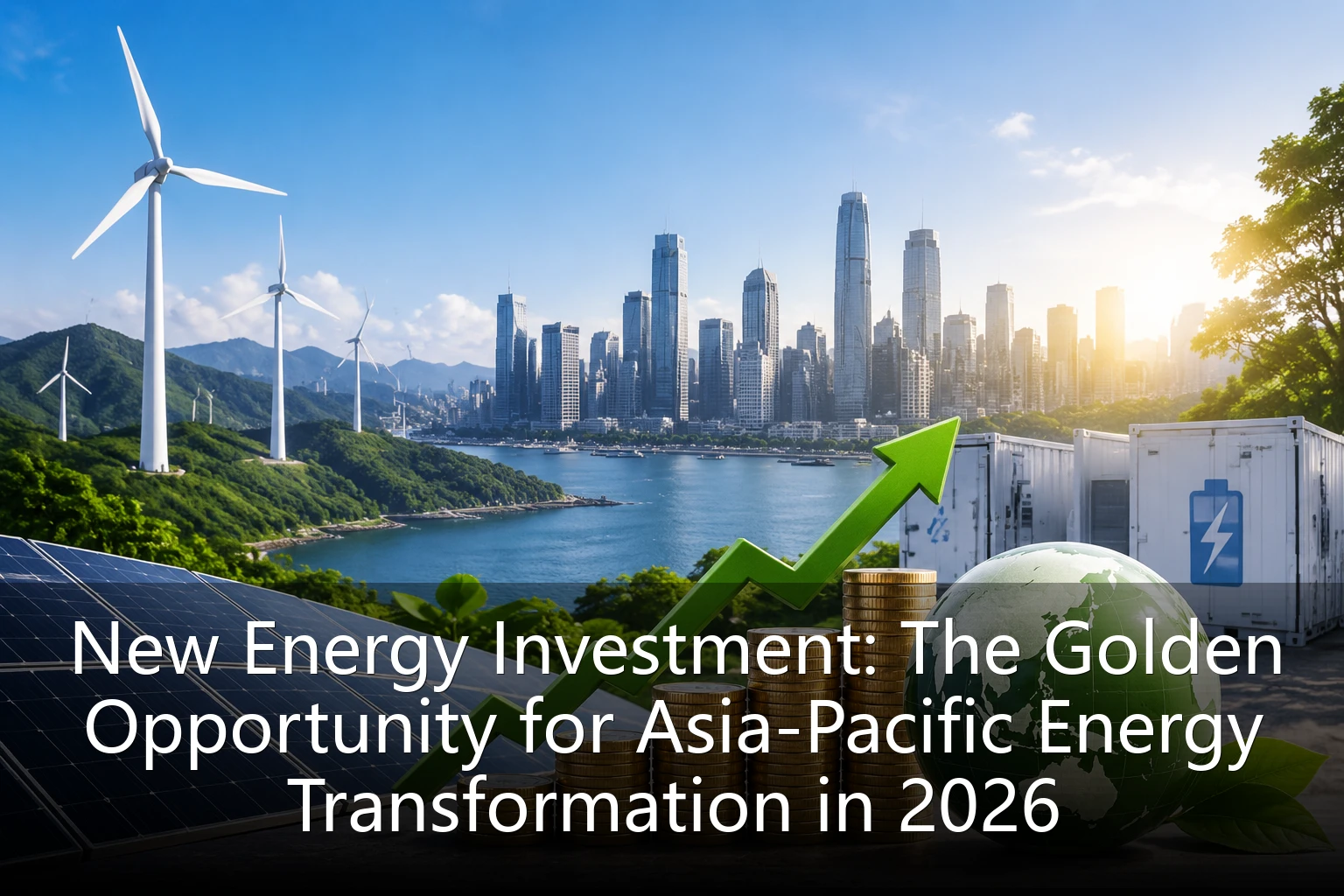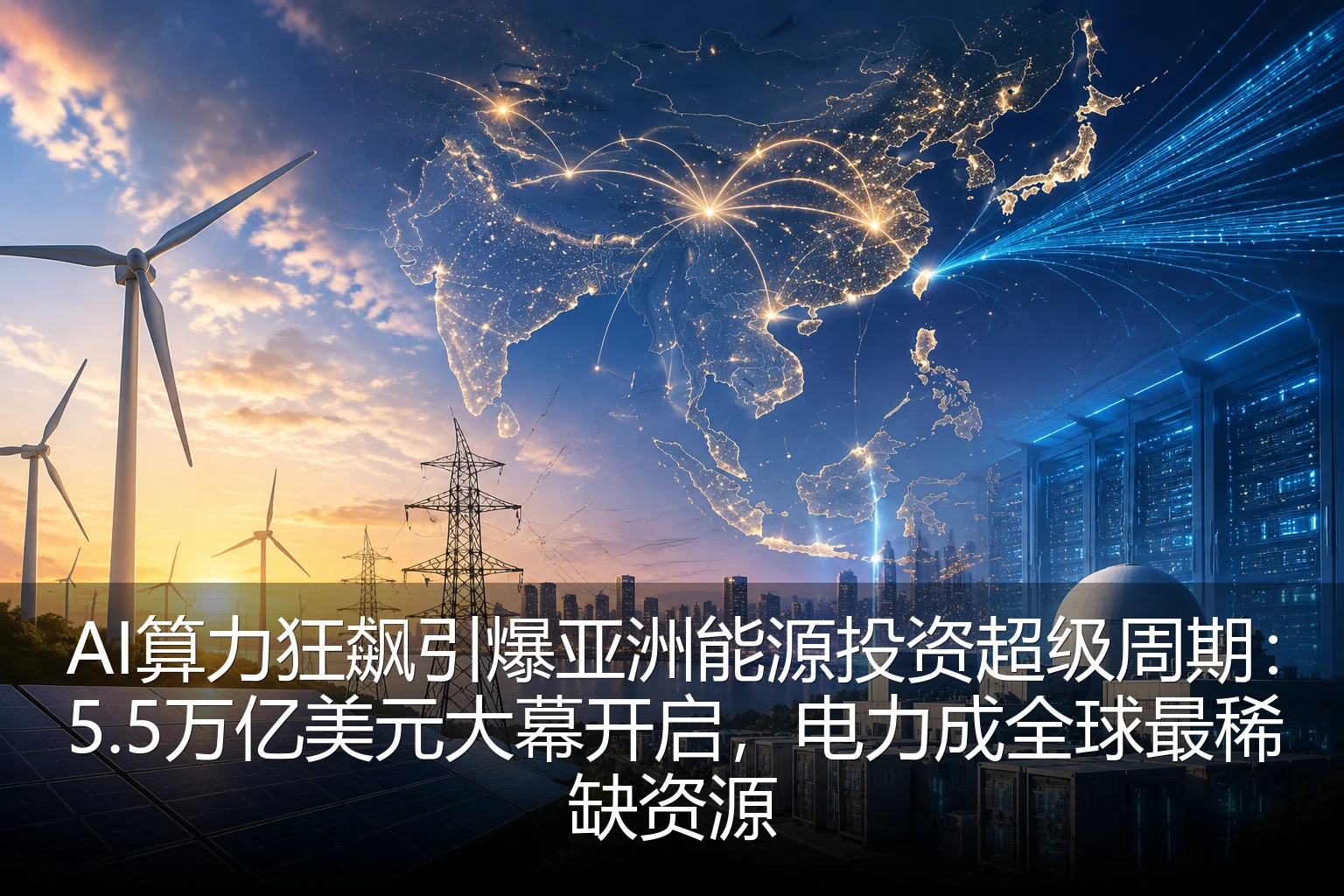


In 2026, as the global energy landscape undergoes drastic restructuring, renewable energy is no longer a novel concept but a definitive trend pursued by global capital. From hydropower stations along the Mekong River in Laos to solar farms in the Australian outback and green bonds listed on the Singapore Exchange, renewable energy investment is reshaping the Asia-Pacific economic landscape at an unprecedented pace. Yet this trend did not emerge from nowhere. To truly grasp the deep logic behind 'why invest in energy,' we must return to the wellspring of history and trace the century-long journey of renewable energy from fringe experiment to mainstream choice.
I. Origins: The Oil Crisis and the Awakening of Energy Independence
The true starting point of the modern renewable energy industry can be traced back to the 1970s. In 1973, the Fourth Middle East War broke out, and the Organization of Arab Petroleum Exporting Countries (OAPEC) declared an oil embargo against nations supporting Israel. International oil prices skyrocketed from $3 per barrel to nearly $12 within months. The crisis's impact on the global economy was devastating: the US, Japan, and Western European countries plunged into severe recession, inflation soared, and industrial output plummeted. It was against this backdrop that energy security became a top-tier strategic issue for governments for the first time.
In 1974, the International Energy Agency (IEA) was established, with one of its core missions being to reduce member countries' dependence on oil and develop alternative energy sources. That same year, the US Congress passed the Solar Energy Research, Development, and Demonstration Act, allocating hundreds of millions of dollars for solar technology R&D. Japan launched its 'Sunshine Project,' systematically advancing research into solar, geothermal, and hydrogen energy. Though limited in scale, these early policies laid the institutional groundwork for subsequent technological breakthroughs.
Notably, the 1970s energy crisis also gave birth to the first modern wind turbines. Denmark built the world's largest wind farm at the time in 1976, with a single-unit capacity of just 30 kilowatts. In Laos, hydropower development was just beginning in the 1970s; the first large-scale hydropower station on the Nam Ngum River—Nam Ngum 1—was commissioned in 1971 with an installed capacity of 155 megawatts, forming the prototype for Laos's 'Battery of Southeast Asia' strategy.
2. Development Stages: The Leap from Policy-Driven to Market-Driven
Phase 1: Policy Nurturing Period (1980-2000)
In the 1980s, oil prices fell, and the urgency for renewable energy development waned somewhat, but technological exploration did not cease. In 1991, Germany pioneered the Electricity Feed-in Act, requiring grid operators to purchase renewable energy electricity at fixed prices, considered the prototype for modern feed-in tariff (FIT) policies. In 1997, the EU released the White Paper on Renewable Energy, setting a target for the first time of 12% renewable energy in EU energy consumption by 2010.
During this period, the Asia-Pacific region also began to awaken. In 1994, India established the Indian Renewable Energy Development Agency (IREDA), becoming one of the first developing countries to set up a dedicated agency to promote renewable energy. In 1999, China launched the 'Brightness Project' to provide solar and wind power to remote areas. However, constrained by technology costs, renewable energy's share in the global energy mix remained negligible. In 1999, global renewable energy power generation installed capacity was only 300 gigawatts, with hydropower accounting for the vast majority.
Phase 2: Scaled Expansion Period (2000-2015)
The first fifteen years of the 21st century marked the turning point for renewable energy moving from the fringe to the mainstream. In 2004, Germany revised its Renewable Energy Sources Act (EEG), significantly increasing subsidies for wind and solar power, triggering the first global wave of renewable energy investment. Spain, Italy, Japan, and other nations followed suit. After the 2008 global financial crisis, countries seized on the green economy as a key lever for recovery; the US American Recovery and Reinvestment Act allocated $90 billion for clean energy.
Technological breakthroughs accelerated during this period. The price of solar photovoltaic modules fell from $5 per watt in 2000 to $0.6 per watt in 2015, a drop of over 80%. The levelized cost of electricity for onshore wind also fell by about 50%. In 2010, global renewable energy investment exceeded $200 billion for the first time, with the Asia-Pacific region accounting for over 30%. Laos also experienced a hydropower development boom during this period; Nam Ngum 2 was commissioned in 2010 with an installed capacity reaching 1,000 megawatts, making electricity exports a pillar of the national economy.
The signing of the Paris Agreement in 2015 marked a new phase in the global energy transition. 195 countries pledged to limit global warming to within 2 degrees Celsius, providing unprecedented policy certainty for renewable energy development.
Phase 3: Cost Advantage and Capital Influx Period (2016-Present)
After 2016, renewable energy entered an era of 'cost competition.' Data from the International Renewable Energy Agency (IRENA) shows that the cost of grid-connected solar power fell to $0.05 per kilowatt-hour in 2020, lower than the cheapest fossil fuel generation. In 2023, global renewable energy investment surpassed $1.8 trillion, exceeding fossil fuel investment for the first time. In 2026, global clean energy investment is projected to exceed $2.5 trillion, with the Asia-Pacific region being the fastest-growing area.
Landmark events in this phase include: China announcing its 'dual carbon' goals in 2020, propelling its domestic renewable energy installed capacity to number one globally; ASEAN nations launching the Laos-Thailand-Malaysia-Singapore Power Integration Project (LTMS-PIP) in 2024 to promote cross-border green electricity trading; and Laos releasing its National Renewable Energy Development Plan in 2025, targeting a 50% renewable energy share by 2030. Capital is also accelerating its influx, with global renewable energy M&A transaction value reaching $80 billion in 2025, over 40% of which occurred in the Asia-Pacific region.
3. Key Background: The Historic Confluence of Three Driving Forces
The explosive growth of the renewable energy trend in the third decade of the 21st century stems from the confluence of three historic driving forces:
- The Impetus of the Climate Crisis: Reports from the Intergovernmental Panel on Climate Change (IPCC) continue to sound the alarm that global carbon emissions must be reduced by 45% before 2030 to avoid catastrophic consequences. This scientific consensus has translated into policy commitments from governments worldwide, from the EU's 'Green Deal' to China's 'dual carbon' goals and ASEAN nations' renewable energy targets, with policy frameworks becoming increasingly sophisticated.
- The Cliff-like Decline in Technology Costs: According to the 'learning curve' theory, each time the installed capacity of renewable energy doubles, costs fall by 15-20%. Solar module costs dropped 90% in 20 years, and energy storage battery costs fell 80% in 10 years. This has enabled renewable energy to achieve 'grid parity' in more and more markets, no longer reliant on subsidies.
- The Strategic Imperative of Energy Security: The global energy crisis triggered by the Russia-Ukraine conflict made nations acutely aware of the risks of dependence on fossil fuel imports. Countries like Laos and Myanmar, with abundant hydropower and solar resources, are transforming from energy importers to exporters, while resource-poor nations like Japan and South Korea secure energy supply by investing in overseas renewable energy projects.
4. Implications for Today: Why Invest in Energy?
Reviewing the historical origins and development of the renewable energy trend, we can distill several core insights for current energy investment:
First, the long-term trend is irreversible. From the 1970s oil crisis to the carbon neutrality race of 2026, the development path of renewable energy has experienced multiple policy fluctuations and technological bottlenecks, but the overall direction has remained consistent. Investing in energy is fundamentally investing in a long-term trend with increasing certainty.
Second, the Asia-Pacific region is the core engine of future growth. The International Energy Agency predicts that from 2025 to 2030, the Asia-Pacific region will contribute over 60% of global new renewable energy capacity additions. Countries like Laos, Vietnam, and Indonesia are becoming new investment hotspots, while financial centers like Singapore and Thailand provide convenient channels for cross-border capital.
Third, policy risks and opportunities coexist. Historically, adjustments to subsidy policies in countries like Germany and Spain led to severe market volatility. Investors need to closely monitor policy developments in various countries, especially the regulatory frameworks and power trading rules in emerging markets like Laos and Thailand.
Fourth, technological diversification is key to success. From hydropower, wind, and solar to energy storage and hydrogen, the technology roadmap for renewable energy is constantly expanding. Laos's hydropower advantages, Australia's solar potential, and Indonesia's geothermal resources offer a rich array of choices for differentiated investment.
Looking back from the vantage point of 2026, renewable energy has journeyed from a laboratory prototype in the 1970s to the mainstream investment arena it is today, accumulating half a century of breakthroughs. For investors focused on 'why invest in energy,' understanding this history is not just about grasping the present but about seizing the initiative in the future energy transformation. Laos Asia-Pacific Finance will continue to track this trend, providing you with cutting-edge market insights and investment decision-making references.