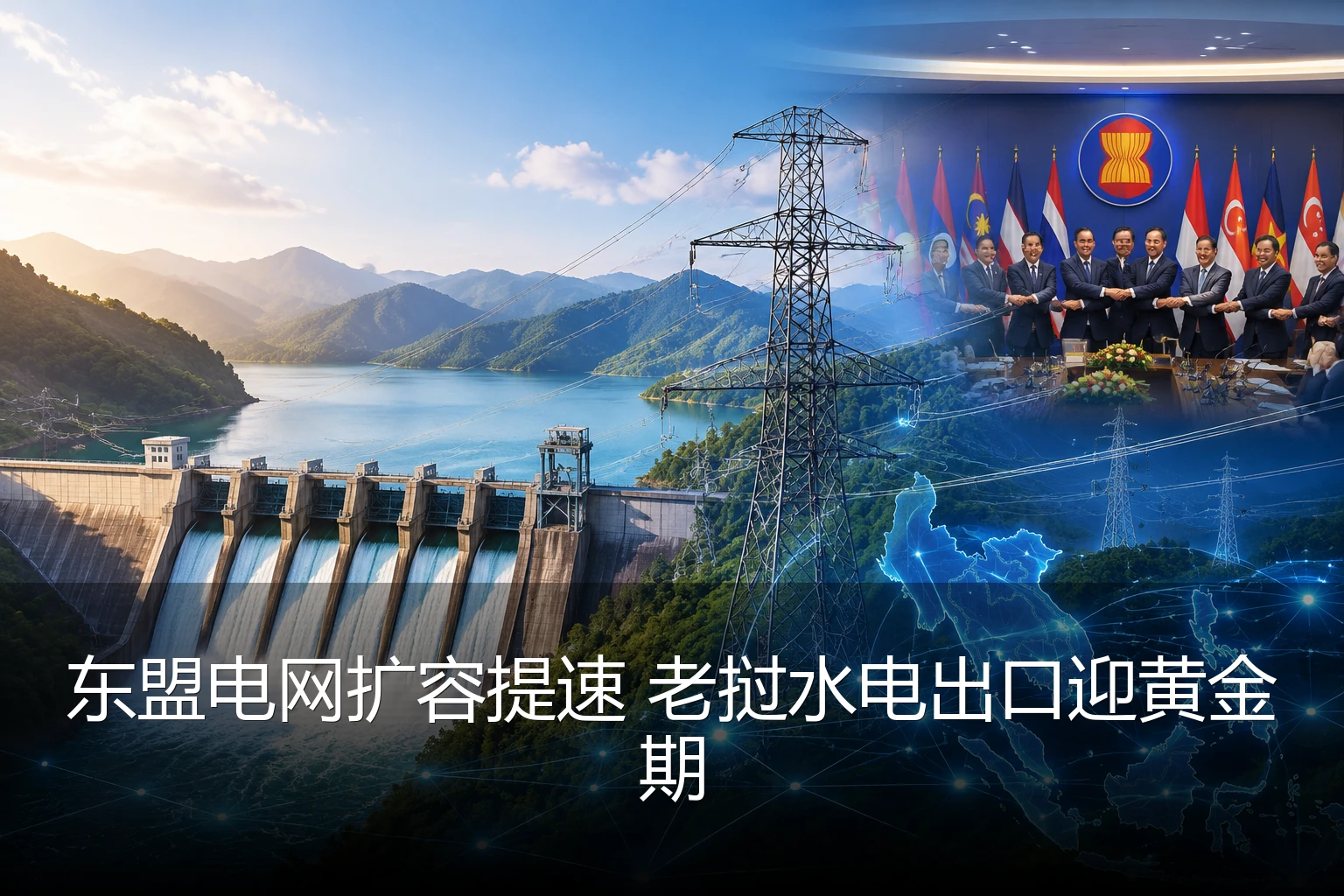
On August 1, 2026, in Vientiane, Laos, a milestone agreement aimed at expanding regional power trade was officially signed during the recently concluded ASEAN Energy Ministers' Meeting. The energy ministers from Laos, Thailand, Malaysia, and Vietnam jointly reached a cooperative agreement for cross-border electricity trading, planning to increase the cross-border transmission capacity of the ASEAN power grid to 20 GW by 2030. As the largest hydropower generation country in Southeast Asia, Laos will play a core role in this regional energy interconnection process.
ASEAN Power Grid Expansion: From Vision to Action
The concept of the ASEAN Power Grid was first proposed in 1997, aiming to optimize regional power resources through cross-border transmission lines. However, the plan progressed slowly for a long time due to differences in national power systems and infrastructure bottlenecks. Only in recent years, with the increase in renewable energy share and the growing demand for hydropower exports from Laos, has grid interconnection re-emerged as a focus for all parties.
According to the signed agreement, the four countries will first focus on upgrading the transmission lines between Laos-Thailand-Malaysia and Laos-Vietnam. It is expected that the power exported from Laos will increase by at least 3 GW by 2028, equivalent to the installed capacity of two large hydropower stations.
Laos's Re-emergence as the "Battery of Southeast Asia"
Laos possesses rich water resources, with the theoretical hydropower potential of the Mekong River and its tributaries exceeding 26 TWh. In recent years, the Lao government has actively promoted hydropower development, not only to meet domestic power needs but also to treat electricity exports as a core pillar of national economic growth. Currently, over 80 hydropower stations are operational in Laos, generating approximately 50 billion kWh annually, with over 75% exported to neighboring countries.
The opening of the China-Laos Railway has significantly reduced the transportation costs for Lao power transmission equipment and maintenance materials; Thailand is Laos's largest power buyer, with long-term power purchase agreements extending to 2035; and Vietnam and Myanmar have also successively increased their quotas for purchasing power from Laos.
Reshaping the Regional Energy Landscape: A Win-Win Situation
The accelerated construction of the ASEAN Power Grid is not just an infrastructure upgrade; it will also reshape the regional energy trade map. On one hand, Malaysia and Vietnam can reduce their reliance on fossil fuel power generation and alleviate carbon emission targets by importing hydropower from Laos; on the other hand, Laos can utilize its geographical advantage to convert water resources into stable foreign exchange income.
Analysts from the International Energy Agency (IEA) point out that Southeast Asia is one of the regions with the fastest-growing global energy demand, and grid interconnection helps improve overall system flexibility and reduce the cost of connecting renewable energy. Taking Laos as an example, surplus electricity during the wet season can be transmitted to power-deficient neighbors, while the dry season can be compensated through regional reserves.
Challenges and Prospects
Despite the broad prospects, the construction of the ASEAN Power Grid still faces challenges related to insufficient investment and institutional coordination. The World Bank estimates that achieving full ASEAN grid interconnection requires over $50 billion in investment. The Deputy Prime Minister of Laos stated during the meeting that the government welcomes international capital to participate in the modernization projects of Lao transmission lines and smart grids, and will provide a mechanism for stable investment returns.
From a long-term trend perspective, with the advancement of the ASEAN Energy Cooperation Action Plan, the regional power market is expected to achieve preliminary integration by the end of 2026. Laos's unique position as the "Battery of Southeast Asia" will also be further solidified.