I. Current Status of Electricity Price Fluctuations in Asia-Pacific: Record Highs in Some Countries, Significant Regional Divergence
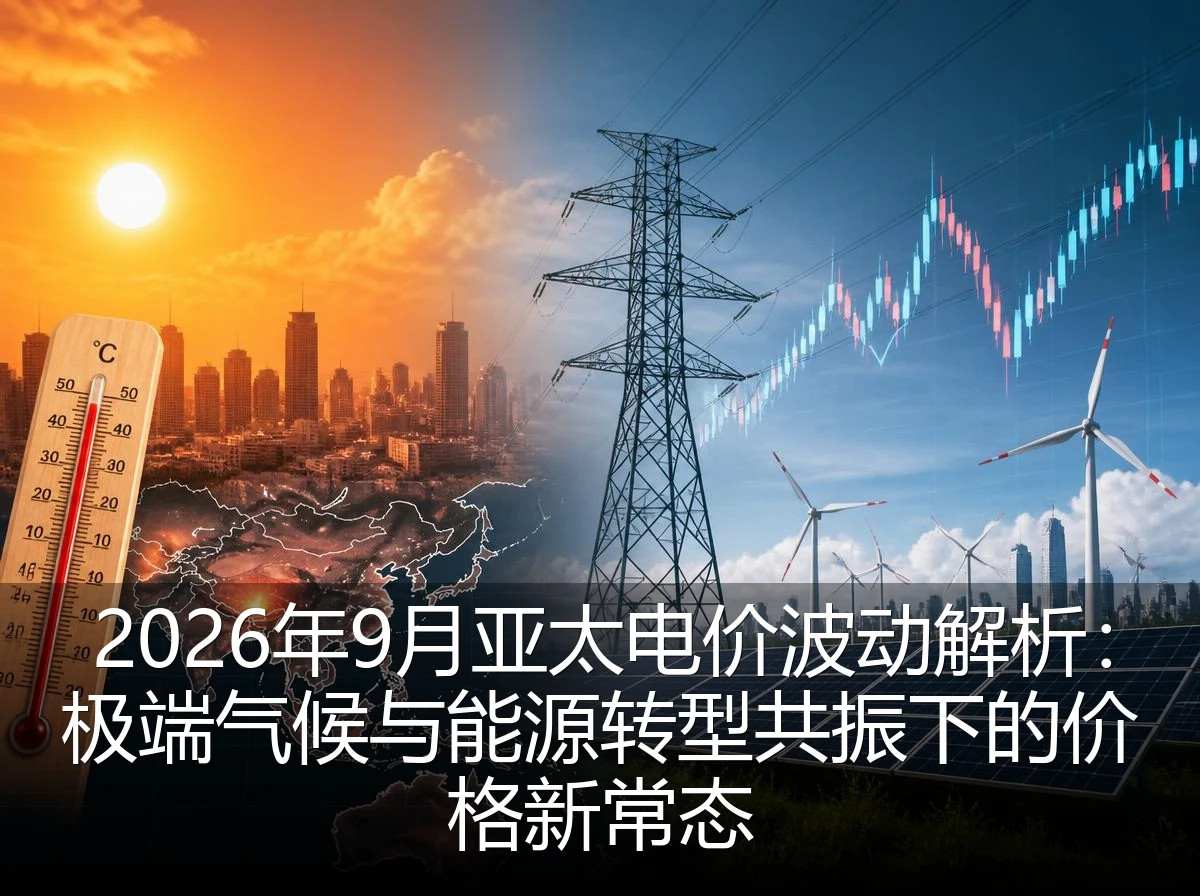
In September 2026, the electricity price market in the Asia-Pacific region exhibited a polarized pattern of uneven heating and cooling. In many Southeast Asian countries, soaring electricity demand due to persistent high temperatures led to sharp increases in electricity prices; conversely, in some Northeast Asian nations, electricity prices remained relatively stable due to energy structure optimization and policy regulation. For instance, electricity prices in Thailand, Vietnam, and Malaysia rose by 5%-12% compared to August. The industrial electricity price in Bangkok, Thailand, reached $0.42/kWh, setting a record high for 2026. Meanwhile, Japan and South Korea maintained electricity prices in the $0.25-$0.30/kWh range, a 3% decrease compared to the same period last year, due to increased nuclear power share and the integration of renewable energy.
Laos, serving as a regional "energy hub," has a significant impact on neighboring countries' electricity prices. In September 2026, Laos's industrial electricity price increased by 2.1% compared to August, mainly because increased hydropower exports led to domestic supply tightness, while the rising demand for regional grid interconnection also pushed up transmission costs. According to data from the Lao Ministry of Energy, Laos's hydropower exports reached 12 billion kWh in September, an 8% year-on-year increase. Exports to Thailand and Vietnam grew by 10% and 7%, respectively, driving a linked rise in regional electricity prices.
II. Core Drivers of Electricity Price Fluctuations: The Resonance Effect of Extreme Climate and Energy Transition
1. Extreme High Temperatures: The Dominant Factor Driving Surging Electricity Demand
During the summer of 2026, the Asia-Pacific region experienced rare high temperatures. Temperatures in many Southeast Asian countries exceeded 40°C, setting a historical high for the corresponding period. High temperatures led to a surge in electricity demand for air conditioning and cooling equipment. According to International Energy Agency (IEA) data, electricity consumption for cooling in Southeast Asia increased by 15% in August-September 2026 compared to the same period in 2025. In Thailand and Vietnam, the share of cooling electricity consumption reached 35% and 30% of total consumption, respectively. The surge in electricity demand directly pushed up electricity prices, especially industrial electricity, as businesses were forced to pay higher utility bills to ensure production.
It is worth noting that extreme high temperatures not only affect electricity demand but also energy supply. For example, high temperatures lead to decreased hydropower generation (due to lower river water levels), and the generation efficiency of renewable energy (such as photovoltaics and wind power) is also reduced by high temperatures (photovoltaic component efficiency decreases as temperature rises), leading to an expanded supply gap and further driving up electricity prices.
2. Energy Transition: Intermittency of Renewable Energy and Rising Backup Power Costs
The energy transition in the Asia-Pacific region is accelerating, with the share of renewable energy continuously increasing. In 2026, the share of renewable energy generation in the Asia-Pacific region reached 35%, an increase of 3 percentage points from 2025. However, the intermittency of renewable energy (such as photovoltaics depending on sunlight and wind power depending on wind) requires backup power (such as natural gas and coal) to ensure stable electricity supply. The rising cost of backup power has become a significant factor in electricity price fluctuations.
For example, in September 2026, natural gas prices in the Asia-Pacific region rose by 8% compared to August, mainly due to geopolitical factors (tightening natural gas supply caused by Middle Eastern tensions) and increased demand (rising backup power needs). The increase in natural gas prices directly raised generation costs, which in turn led to higher electricity prices. According to data from the Asian Power Association, the natural gas generation cost in the Asia-Pacific region increased by 12% in September 2026 compared to the same period in 2025, with Japan and South Korea accounting for 40% and 35% of the total generation cost, respectively.
3. Supply Chain and Geopolitics: The Interlinked Effect on Energy Prices
The volatility of the energy supply chain is also a major reason for electricity price fluctuations. In 2026, global coal supply tightened due to export restrictions from Australia and Indonesia, causing coal prices in the Asia-Pacific region to rise by 10% compared to the same period in 2025. The increase in coal prices drove up coal-fired power generation costs, which in turn affected electricity prices. For example, coal-fired power generation costs in Indonesia increased by 8% compared to the same period in 2025, leading to a 5% rise in its electricity prices.
In terms of geopolitical factors, tensions in the Middle East have caused fluctuations in crude oil prices, which subsequently affect natural gas prices (due to the linkage between natural gas and crude oil prices). In September 2026, Brent crude oil prices rose by 6% from August, leading to a simultaneous rise in natural gas prices in the Asia-Pacific region, increasing power generation costs. Furthermore, the energy game between Russia and Europe has indirectly affected the Asia-Pacific region. As Europe increased its natural gas imports, global natural gas supply became tight, putting upward pressure on natural gas prices in the Asia-Pacific region.
III. Laos's Role as an "Energy Hub": Regional Impact on Electricity Prices
As a "battery of Southeast Asia," Laos has abundant hydropower resources and is a vital source of regional power supply. In September 2026, Laos's hydropower exports reached 12 billion kWh, an 8% year-on-year increase, with exports to Thailand and Vietnam growing by 10% and 7%, respectively. Laos's electricity price trends significantly affect neighboring countries. For instance, Thailand's electricity prices rose by 3% from August due to increased hydropower imports from Laos, while Vietnam's electricity prices rose by only 1% due to stable hydropower supply from Laos.
However, Laos's own electricity prices are also under pressure. In September 2026, Laos's industrial electricity prices rose by 2.1% from August, mainly due to increased domestic electricity demand (such as manufacturing expansion) and rising transmission costs (increased investment in regional grid interconnection projects). According to the Lao Ministry of Energy's forecast, electricity prices in Laos will remain stable in the fourth quarter of 2026, as hydropower generation will increase with the arrival of the rainy season, and the completion of regional grid projects will lower transmission costs.
IV. Future Outlook: Trends and Countermeasures for Electricity Price Fluctuations
1. Short-Term Trend: Electricity Prices Will Remain High, But Volatility Will Slow Down
In the short term, electricity prices in the Asia-Pacific region will remain high, but volatility will slow down. On one hand, extreme high temperatures may continue until October, keeping electricity demand high; on the other hand, renewable energy generation will increase with seasonal changes (such as photovoltaic generation rising with increased sunlight hours), and the supply gap will gradually narrow. Furthermore, policy adjustments by various governments (such as electricity price subsidies and demand-side management) will alleviate upward pressure on electricity prices.
2. Long-Term Trend: Energy Transition Will Reshape the Electricity Price Landscape
In the long term, the energy transition will reshape the electricity price landscape in the Asia-Pacific region. The increase in the share of renewable energy will lower generation costs, especially as the costs of photovoltaic and wind power continue to decline (photovoltaic module costs decreased by 5% in 2026 compared to 2025, and wind power costs decreased by 3%), which will drive electricity prices down. Moreover, the development of energy storage technologies (such as battery storage and pumped storage) will solve the intermittency issues of renewable energy, reduce reliance on backup power, and further lower electricity prices.
However, during the initial stage of the energy transition, electricity price fluctuations will still exist. For example, grid integration of renewable energy requires significant grid investment, and the cost of grid investment will be distributed in the electricity price, leading to a short-term rise in electricity prices. Furthermore, the implementation of carbon tax policies (such as the EU Carbon Border Adjustment Mechanism) will increase generation costs and drive up electricity prices.
3. Countermeasures: Choices for Investors and Energy Professionals For investors, attention should be paid to renewable energy projects (such as photovoltaics and wind power) and energy storage technologies, as these sectors will benefit from the energy transition and carry lower risks from electricity price fluctuations. For energy professionals, the focus should be on strengthening demand-side management (such as energy-saving technologies and smart grids) to reduce electricity costs; simultaneously, diversifying energy supply (such as combining renewable energy with backup power) reduces reliance on a single energy source to cope with electricity price volatility.