


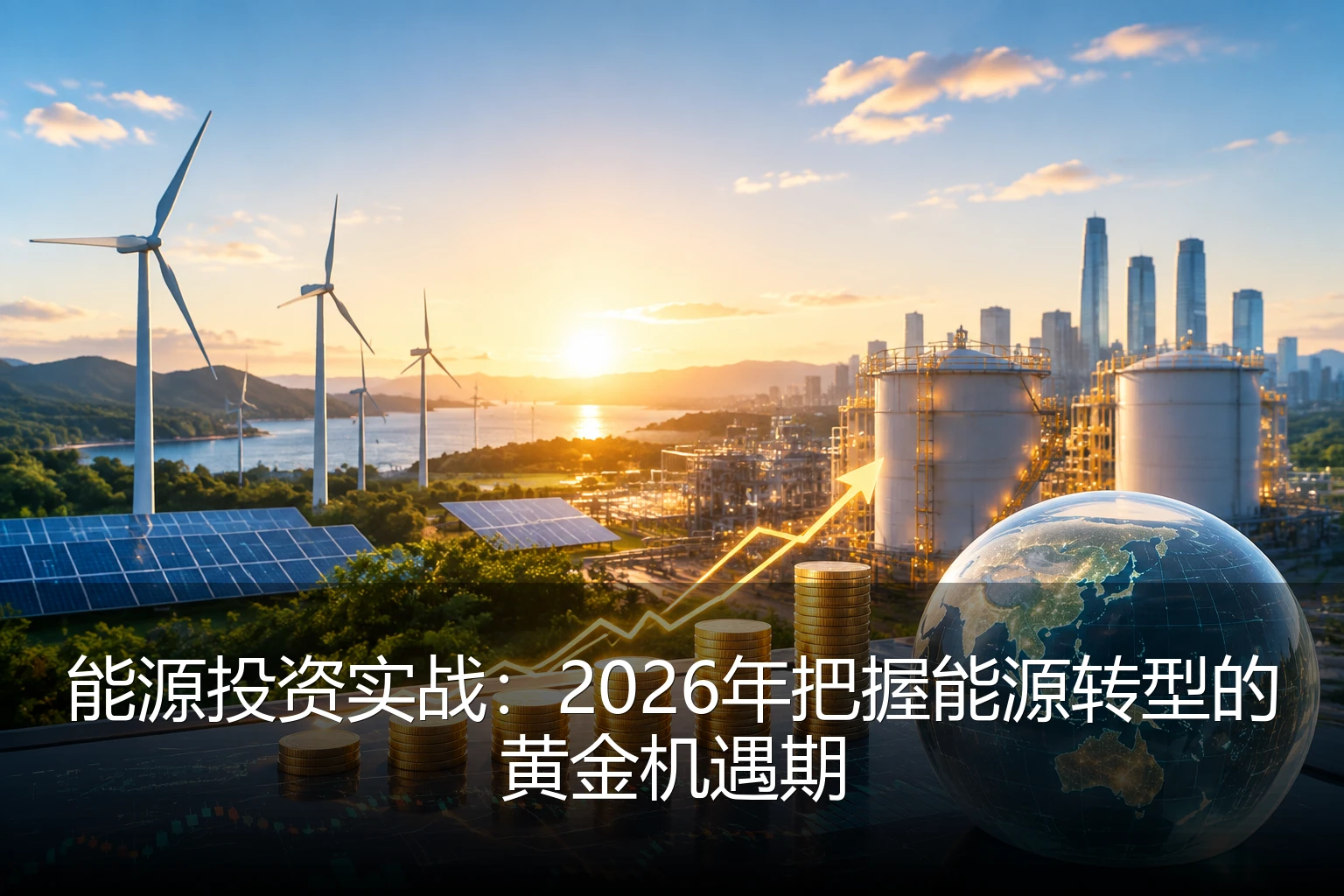
Energy Investment in Practice: Seizing the Golden Opportunity of Energy Transition in 2026
In 2026, the global energy industry is undergoing unprecedented profound changes. With the advancement of carbon neutrality goals, breakthroughs in renewable energy technologies, and the reshaping of the geopolitical landscape, the energy investment sector presents entirely new opportunities and challenges. This article provides a comprehensive practical guide to energy investment for investors from multiple dimensions, including the global energy market structure, investment opportunities in the Asia-Pacific region, practical strategies, and risk management, helping to seize the golden opportunities of this historic transition period.
Global Energy Market: Transition and Restructuring in Parallel
The global energy market in 2026 is in a transitional phase between traditional fossil fuels and renewable energy. According to the latest report from the International Energy Agency, global renewable energy installed capacity has surpassed traditional fossil fuels for the first time, marking a historic turning point in the energy structure. This transition is not a simple substitution but a comprehensive restructuring of the energy system.
In the traditional energy sector, despite facing carbon neutrality pressures, fossil fuels such as oil and natural gas will still play an important role in the next decade. Especially in the Asia-Pacific region, as emerging economies continue their industrialization and urbanization processes, energy demand continues to grow, providing a stable investment foundation for traditional energy. At the same time, traditional energy companies are accelerating their transformation into integrated energy service providers, achieving sustainable development by reducing carbon emissions through technological innovation.
On the other hand, the renewable energy sector is experiencing explosive growth. Clean energy technologies such as solar, wind, and hydrogen are continuously making breakthroughs, and costs are steadily decreasing, significantly enhancing market competitiveness. According to BloombergNEF forecasts, global renewable energy investment will exceed $1.5 trillion in 2026, a year-on-year increase of 20%, with the Asia-Pacific region accounting for over 40%, becoming a core engine of global energy transition.
Asia-Pacific Energy Investment: Coexistence of Opportunities and Challenges
The Asia-Pacific region, as one of the fastest-growing global economies, has persistently high energy demand and rich renewable energy resources, making it a hotbed for global energy investment. In the first half of 2026, total energy investment in the Asia-Pacific region reached $380 billion, a year-on-year increase of 15%, with renewable energy investment accounting for over 50% for the first time.
Laos, as an important energy exporter in Southeast Asia, plays a unique role in the regional energy landscape. With abundant hydropower resources, Laos is known as the "battery of Southeast Asia," and electricity exports have become a vital pillar of the national economy. In the first half of 2026, Laos's electricity exports grew by 18%, reaching $1.2 billion, demonstrating the strong momentum of energy exports. At the same time, the Lao government is actively promoting the diversification of the energy structure, vigorously developing renewable energy such as photovoltaics and wind power, attracting a large amount of foreign investment.
In terms of investment opportunities, energy investment in the Asia-Pacific region is characterized by diversity:
- Renewable Energy Projects: Clean energy projects such as solar, wind, and hydropower have stable returns on investment and strong policy support, making them ideal choices for long-term investors.
- Energy Infrastructure: There is high demand for infrastructure construction, including grid upgrades, energy storage systems, and smart grids, providing stable returns for energy investors.
Practical Energy Investment Strategies
In practical energy investment, investors must adopt scientific strategies to balance risk and return. Here are several practical strategy recommendations:
1. Diversified Asset Allocation
Energy investment should not be limited to a single field or technology, but rather build a diversified investment portfolio, balancing the investment proportion across different links such as traditional fossil fuels and renewable energy, upstream and downstream, and development and operation. Based on risk tolerance and investment objectives, allocate different asset classes such as traditional energy, renewable energy, energy services, and energy technology to reduce risks caused by fluctuations in a single market.
2. Long-Term Value Investing
Energy transition is a long-term process; energy investment should be guided by long-term value, focusing on the sustainable development capabilities and core competitiveness of enterprises. Select companies with technological advantages, cost control capabilities, and market expansion capabilities, rather than chasing short-term market hotspots. At the same time, pay attention to policy direction and industry development trends, and strategically position for dominant technologies and business models in future energy markets.
3. Regional Differentiation Layout
Different countries and regions have significant differences in energy policies, market environments, and resource endowments; investors should formulate differentiated layout strategies based on regional characteristics. Increase investment in regions with strong policy support, mature market mechanisms, and superior resource endowments, such as emerging energy markets in the Asia-Pacific region. At the same time, pay attention to energy cooperation mechanisms between regions, such as the ASEAN power grid interconnection project, to seize investment opportunities brought by regional cooperation.
4. Risk Management and Hedging
Energy investment faces multiple risks such as price fluctuations, policy changes, and technological iteration; investors must establish a sound risk management system. Hedge price risks through financial derivatives, respond to technological iteration risks through technological innovation, and anticipate policy changes through policy research. At the same time, establish a dynamic adjustment mechanism to optimize the investment portfolio in a timely manner according to market changes, maintaining the flexibility and adaptability of the investment strategy.
Case Study: Successful Energy Investment Practices
In the first half of 2026, the successful practices of several energy investment institutions provided valuable experience for the industry. Taking a Chinese-funded energy investment group in Laos as an example, this group adopted a "traditional energy + renewable energy" dual-engine strategy, achieving synergistic development and value maximization of energy assets while maintaining the stable operation of renewable energy projects such as hydropower and photovoltaics, and actively developing energy storage systems and smart grid construction.
The group achieved remarkable results through the following strategies:
- Adopting a full life cycle management model of "construction-operation-optimization" to improve the operational efficiency of energy assets.
- Utilizing digital technology to achieve intelligent management of the entire chain of energy production, transmission, and consumption.
- Establishing diversified financing channels to reduce funding costs and increase investment returns.
Data shows that the group's energy investment return in the first half of 2026 reached 12.8%, exceeding the industry average, which fully proves the effectiveness of scientific investment strategies.
Future Outlook: Long-term Value of Energy Investment
Looking ahead, energy investment will show the following trends:
- Accelerated Energy Transition: As carbon neutrality goals approach, the energy transition will enter a fast track, and renewable energy investment will continue to grow.
- Development Driven by Technological Innovation: Technological innovations such as hydrogen energy, energy storage, and smart grids will promote the upgrading of the energy industry and create new investment opportunities.
- Deepening Regional Cooperation: Energy cooperation mechanisms in the Asia-Pacific region will be further improved, the degree of regional energy market integration will increase, and the investment environment will become more optimized.
- ESG Investment Becomes Mainstream: Environmental, social, and governance factors will become important considerations in energy investment decisions, and green and low-carbon investment will become mainstream.
Conclusion: Grasping the Key Moment for Energy Investment
In 2026, the global energy industry is undergoing a historic transformation, and energy investment faces unprecedented opportunities and challenges. Investors should fully recognize the long-term nature and complexity of the energy transition, adopt scientific and reasonable investment strategies, balance risks and returns, and seize the golden opportunity period of the energy transition.
In practical investment, investors should pay attention to global energy market development trends, conduct in-depth research on energy investment opportunities in the Asia-Pacific region, build diversified investment portfolios, and adopt long-term value investment strategies while establishing a sound risk management system. At the same time, they should closely monitor policy direction and technological innovation to pre-position the dominant technologies and business models of the future energy market.
Energy transition is a long battle, not a short sprint. Investors should view energy investment with a strategic perspective, grasp long-term value, and achieve sustainable wealth growth in the wave of the energy revolution. As energy investment experts say: "At the crossroads of energy transition, today's choices will determine tomorrow's landscape."